Fix Backblaze B2 Authentication Errors — NetDrive

Troubleshoot Backblaze B2 login failures in NetDrive caused by bucket-scoped application keys, expired keys, and mismatched key pairs.
A Backblaze B2 drive that mounted fine last month suddenly throws an authentication error, or a brand-new connection rejects credentials that were copied and pasted straight from Backblaze’s own console. Both cases usually trace back to how B2 application keys work rather than anything wrong with the account itself — B2 keys carry restrictions and expiration dates that a plain username-and-password login doesn’t.
Mount Backblaze B2 as a Drive Letter
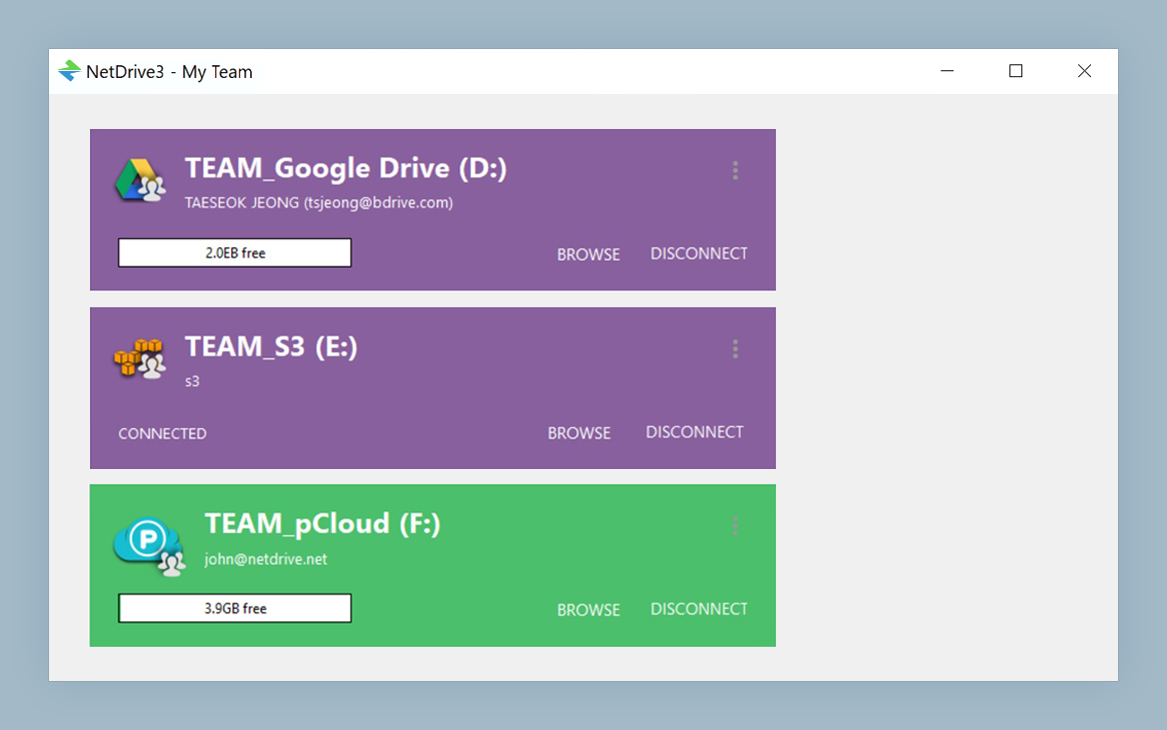
NetDrive lets Google Drive, OneDrive, S3, SFTP, WebDAV and more appear as native drives on Windows and macOS — no syncing, no full downloads.
- Multipart uploads for large archive files
- Background uploads keep the drive responsive during transfers
- Available on Windows, macOS, and Linux (experimental)
Free trial. Lifetime and subscription plans available.
Map the Error to a Cause
Backblaze B2 has supported NetDrive connections since version 3.5.434, and almost every authentication failure fits one of these patterns:
| Symptom | Most likely cause |
|---|---|
| ”Access denied” or “unauthorized” naming a specific bucket | The application key is restricted to a different bucket than the one entered |
| Credentials that worked before suddenly fail | The application key expired or was deleted in the Backblaze console |
| Copy-pasted keyID and key are rejected outright | Extra whitespace, a truncated paste, or the wrong pair copied from a list of multiple keys |
Fix 1: Check the Application Key’s Bucket Restriction
Backblaze lets an account create multiple Application Keys in addition to the original Master Application Key, and each scoped key can be restricted to a single bucket for security. That’s the right practice — a NetDrive connection dedicated to one bucket shouldn’t hold a key with account-wide access — but it also means the bucket name entered in NetDrive has to match the bucket the key was created for exactly, or the connection fails with what looks like an invalid-credentials error.
Sign in to the Backblaze B2 console and check the key’s Allowed Bucket(s) setting. If it lists a specific bucket, confirm that name is exactly what’s entered as the bucket in NetDrive’s drive setup — case and hyphenation matter, since B2 bucket names are case-sensitive.

Fix 2: Regenerate an Expired or Deleted Key
Application keys in B2 can be created with an expiration date, and once that date passes the key stops authenticating with no warning inside NetDrive itself — the drive simply can’t log in anymore. The same happens if a key was deleted or revoked directly in the Backblaze console, which shows up identically to expiration from NetDrive’s side.
- In the Backblaze console, create a new Application Key (or check whether the existing one shows as expired/deleted).
- Copy the new keyID and applicationKey immediately — Backblaze only displays the full application key once, at creation time.
- In NetDrive, open Drive Manager, select the B2 drive, click Edit, and replace both the keyID and applicationKey fields with the new values.
- Click Connect to re-authenticate.
Fix 3: Re-enter Credentials Instead of Copy-Pasting Fragments
Because B2 application keys are long, randomly generated strings, a common failure mode is copying only part of the key — a triple-click that misses a trailing character, or a paste that picks up a stray newline. Since Backblaze shows the full applicationKey only once, there’s no way to verify a saved copy against the console after the fact.
If credentials fail immediately after setup and the bucket restriction and expiration both check out, the safest path is generating a brand-new application key rather than trying to debug a possibly-truncated one:
- Delete the old key in the Backblaze console.
- Create a new Application Key, scoped to the correct bucket.
- Paste the keyID and applicationKey into a plain text field first to confirm no whitespace or line breaks got included, then enter them into NetDrive’s connection fields.
When None of These Apply
If the bucket restriction matches, the key isn’t expired, and a freshly generated key still fails, double-check that the account itself hasn’t hit a payment or verification hold — B2 will reject API calls at the account level independently of any individual key’s validity, and that shows up in NetDrive as the same generic authentication failure.
Wrap-up
Most Backblaze B2 authentication failures in NetDrive come down to a bucket-restricted key pointed at the wrong bucket, an expired or deleted key, or a corrupted copy-paste of the long applicationKey string. For the initial setup this troubleshooting builds on, see Mount Backblaze B2 on Windows with NetDrive or Mount Backblaze B2 on macOS with NetDrive. If a similar object-storage setup uses Amazon S3 instead, Fix S3 Access Denied Errors in NetDrive covers the equivalent IAM-permission side of the same problem.
— Kai, NetDrive